
You Probably Already Have an Opinion on Custom Website vs WordPress
Here's how the conversation usually goes. A bakery owner in Sunnyvale asks a friend how to get a website. The friend says WordPress. The bakery owner Googles it, finds fifty hosting companies all saying the same thing, picks one, and ends up paying $25-50 a month for hosting plus $50-200 a year for a theme plus $100+ a year for plugins that do things like contact forms and SEO and backups. It works. Millions of sites run on WordPress and most of them are fine.
But there's a quieter path that rarely gets mentioned, because nobody makes recurring revenue when you take it. A custom-built website - HTML, CSS, maybe a lightweight framework - hosted for $0-20 a year. No plugin updates. No security patches every six weeks. No database to back up. No admin panel that gets targeted by bots 24/7.
The custom website vs WordPress question isn't really about technology. It's about what kind of maintenance you want to sign up for over the next five years.
Why WordPress Is Popular (And Why That Popularity Is Earned)
WordPress deserves credit. It turned website building from a $10,000 agency project into something a motivated person could do over a weekend. The plugin ecosystem is enormous - over 59,000 free plugins in the directory as of 2026. Need an events calendar? There are forty options. Need multilingual support? Done. Need an online store? WooCommerce handles billions in transactions every year.
For bloggers, content-heavy magazines, and membership sites, WordPress is genuinely hard to beat. The block editor has gotten good. The theme ecosystem is deep. The community is massive, which means answers to almost any question are a search away.
According to Hostinger's 2026 comparison, WordPress remains the go-to recommendation for people who want control over their content and plan to publish frequently. That recommendation is honest - for content-first sites, it's a strong choice.
Where Custom Website vs WordPress Gets Interesting for Small Businesses
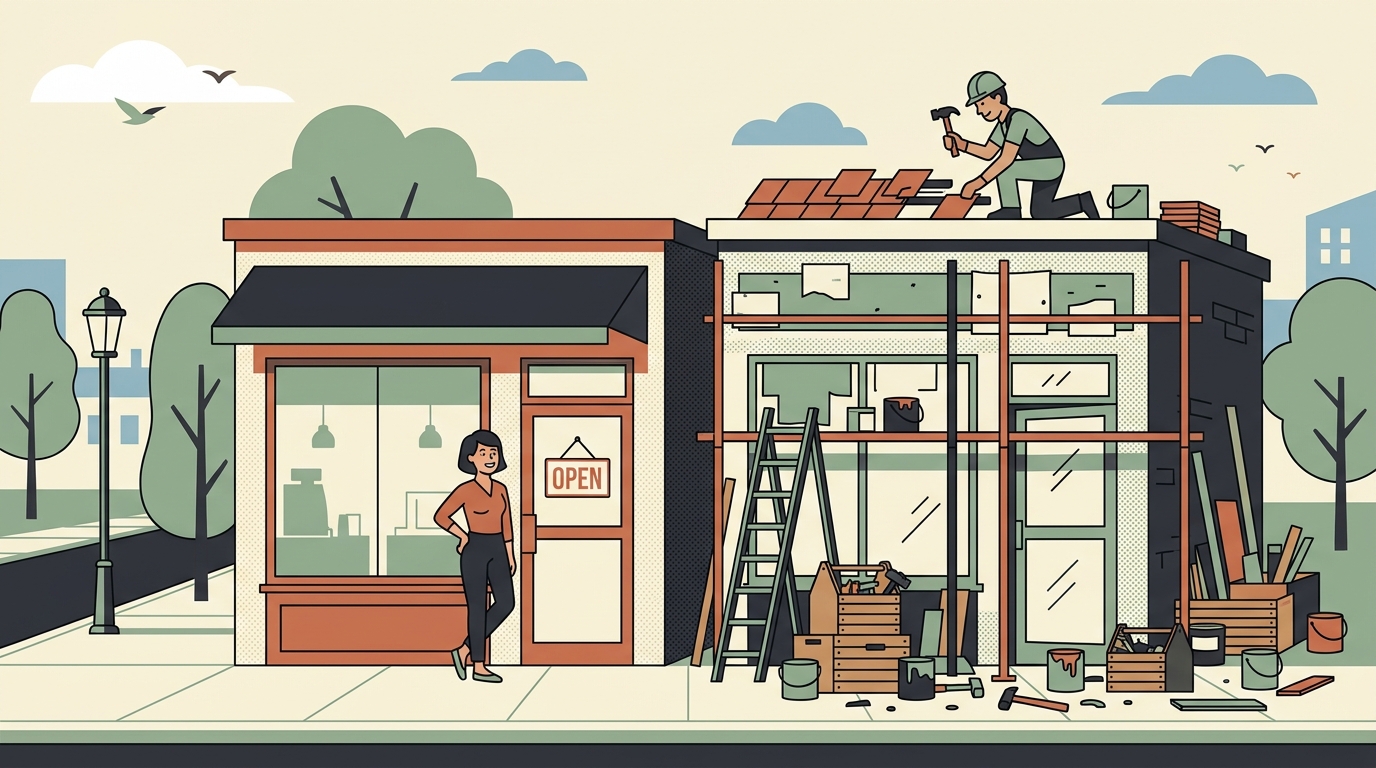
Now here's the part that doesn't get enough airtime. Most small business websites are not content-heavy. A plumbing company in San Jose needs five pages: home, services, about, service area, and contact. A dog groomer in Mountain View needs roughly the same, plus maybe a gallery and a booking link. A taco truck in Santa Clara needs a menu, a schedule, and an Instagram feed.
For these businesses, WordPress is like renting a 4,000 square foot warehouse to store a filing cabinet. It works, but you're paying for a lot of space you'll never use - and you're responsible for maintaining all of it.
A custom website for a business like this can be five static HTML files, a CSS stylesheet, and maybe 30 lines of JavaScript for the mobile menu. Total hosting cost on something like Cloudflare Pages or Netlify: $0. Annual domain renewal: $12. That's it. No database. No login page for bots to hammer. No plugins expiring and breaking your contact form on a Saturday night when you're not checking email.
A Real Example: The Electrician Who Switched
I built a site for an electrician in the East Bay last year. He'd been on WordPress with a premium theme, paying $29/month for managed hosting plus $149/year for the theme license plus $79/year for a forms plugin plus $99/year for an SEO plugin. Call it roughly $700 a year, all-in.
His site had six pages. He hadn't written a blog post in two years. He updated his phone number once - and it took him 45 minutes because the theme's settings panel had changed in an update and he couldn't find where the footer was configured.
We rebuilt it as a clean, fast, mobile-first custom site. Total build cost: under $500. Hosting: free tier on Cloudflare. Annual cost going forward: $12 for the domain. His Google PageSpeed score went from 62 to 98. His bounce rate dropped. He can text me when he needs a change, and I make it in ten minutes. You can see examples of this kind of work at autom84you.com/pages/portfolio.php.
That's the custom website vs WordPress tradeoff in practice: higher upfront investment, dramatically lower ongoing cost, and a site that doesn't need babysitting.
Honest Pros and Cons
Custom Website - Pros
1. Speed. No database queries, no plugin overhead. Static sites consistently score 95+ on PageSpeed. Google has confirmed that page speed affects search rankings, and for local businesses competing in the same city, that edge matters.
2. Security. No admin panel means no attack surface. WordPress sites get targeted constantly - Sucuri's annual report consistently shows WordPress as the most infected CMS platform, not because it's bad, but because it's the biggest target. A static site has essentially nothing to exploit.
3. Cost over time. Year one might cost $500-800 for the build. Years two through ten cost $12/year for the domain. Compare that to $500-1,000/year for WordPress hosting, themes, and plugin licenses.
Custom Website - Cons
1. You need a developer for changes. Adding a page or changing a layout means contacting whoever built it. WordPress lets you do that yourself through the dashboard - if you're comfortable with the dashboard.
2. No plugin marketplace. Want to add a booking widget? On WordPress, you install a plugin. On a custom site, someone needs to integrate it manually or embed a third-party tool.
3. Higher upfront cost. A WordPress site on shared hosting can be live for under $100. A custom build starts around $500 for something professional. The math only favors custom if you plan to keep the site for more than a year or two.
WordPress - Pros
1. Content management. If you blog weekly or update product listings daily, the WordPress editor is genuinely excellent. Nothing custom-built matches the ease of logging in, typing, and hitting publish.
2. Ecosystem. 59,000+ plugins. Thousands of themes. Whatever you need, someone has probably built it. That breadth of options is real and valuable.
3. Community. Stuck? There are forums, YouTube tutorials, Facebook groups, and local meetups. The support network is unmatched.
WordPress - Cons
1. Maintenance overhead. Core updates, theme updates, plugin updates - and any of them can conflict with each other. Managed hosting helps, but that's $25-50/month instead of $5.
2. Performance ceiling. Even well-optimized WordPress sites carry overhead from PHP processing, database queries, and plugin JavaScript. Caching helps, but you're optimizing around the problem rather than eliminating it.
3. Hidden costs. The free WordPress software needs paid hosting, a paid theme (the free ones are limited), and paid plugins for basics like forms, SEO, and backups. The sticker price is $0 but the real price is $300-1,000/year for most small business setups.
What About Wix and Squarespace?
Worth mentioning since they come up in every custom website vs WordPress discussion. Wix starts at $17/month ($204/year) and Squarespace at $16/month ($192/year). Both are easier to use than WordPress. Both look good out of the box. Both lock you into their platform - you can't export a Wix site and host it somewhere else.
For a solo consultant or freelancer who wants a site up by Friday and doesn't want to think about it again, Wix and Squarespace are honest choices. For a business that wants to own its website and control its costs long-term, they're renting - and the rent goes up.
How to Decide (The Honest Version)
Pick WordPress if you publish content regularly - at least twice a month - and you're comfortable managing updates or paying someone to manage them. The CMS is genuinely good for content-heavy sites.
Pick a custom build if your site is mostly static information - your services, your location, your contact info - and you want it fast, secure, and cheap to maintain. Especially if you're a local business where Google PageSpeed and mobile experience directly affect whether customers find you.
The custom website vs WordPress decision shouldn't be driven by what's most popular. It should be driven by what your business actually needs the site to do - today, and for the next five years.
If You're Not Sure Which Way to Go
I've built both. WordPress sites for clients who need a real CMS, and custom sites for businesses that just need something clean, fast, and low-maintenance. The answer depends on your situation, not on which option has better marketing.
If you want a second opinion on your specific setup - what you're paying now, what you actually need, whether the popular choice is the right one for you - send a note to nerd@a84y.com. I'll give you a straight answer, even if that answer is to stick with what you have. Custom websites start at $500, or $75/hr for more complex builds. You can see past work at autom84you.com and decide if the approach makes sense for your business.



Comments
No comments yet. Be the first to share your thoughts!
Leave a Comment