
A bakery owner in San Jose told me she was paying $39 a month for Shopify, plus $5 for a domain, plus a premium theme she bought for $180, plus two apps at $9 each - and she sells exactly four products. Sourdough loaves, cinnamon rolls, a cookie box, and a seasonal special. Four products. Sixty-two dollars a month in fixed costs before a single customer checks out.
She didn't need Shopify. She needed an online store no subscription attached - something that takes payments, shows her products, and doesn't eat into margins on a business that clears maybe $3,000 a month.
This article is about what that looks like in 2026.
Why Shopify Is the Default (and Why That's Fine for Some)
Shopify is popular for a reason. It handles hosting, checkout, inventory, shipping labels, tax calculation, and abandoned cart emails in one dashboard. For a business selling 50+ SKUs with variable shipping rates and wholesale tiers, it earns its monthly fee.
The problem is that most small businesses selling online aren't running a warehouse. They're a candle maker with eight scents, a personal trainer selling three program PDFs, a ceramicist with a dozen mugs. For these sellers, Shopify's $39/mo Starter plan - or $105/mo for Basic with a real storefront - is overhead that never scales down. Sell nothing in January? Still $39.
The question isn't whether Shopify is bad. It's whether there's a way to run an online store no subscription required, with the same checkout experience, for a fraction of the cost.
There is.
The Online Store No Subscription Stack: What It Actually Looks Like
Here's the setup I've built for a handful of clients through Autom84You. Total recurring cost: $0 to $20 a year, depending on whether you want a custom domain.
Stripe handles payments. No monthly fee - they take 2.9% + $0.30 per transaction, same as Shopify Payments. You create products and prices directly in the Stripe dashboard, and Stripe generates hosted checkout pages for each one. No code required for that part.
Cloudflare Pages (or Netlify, or GitHub Pages) hosts your storefront. Free tier. You get a fast, globally distributed site that loads in under a second on mobile. Compare that to the average Shopify store, which loads in 3-4 seconds with a theme and five apps installed.
A static site generator - Astro, Hugo, or even plain HTML - builds the product pages. Each product page has a "Buy Now" button that links to the Stripe-hosted checkout. Customer clicks, pays on Stripe's PCI-compliant page, gets a receipt. Done.
That's the bones. No monthly subscription. No app store. No theme marketplace taking $180 for a font change.
A Real Example: How a Dog Treat Business Runs on This
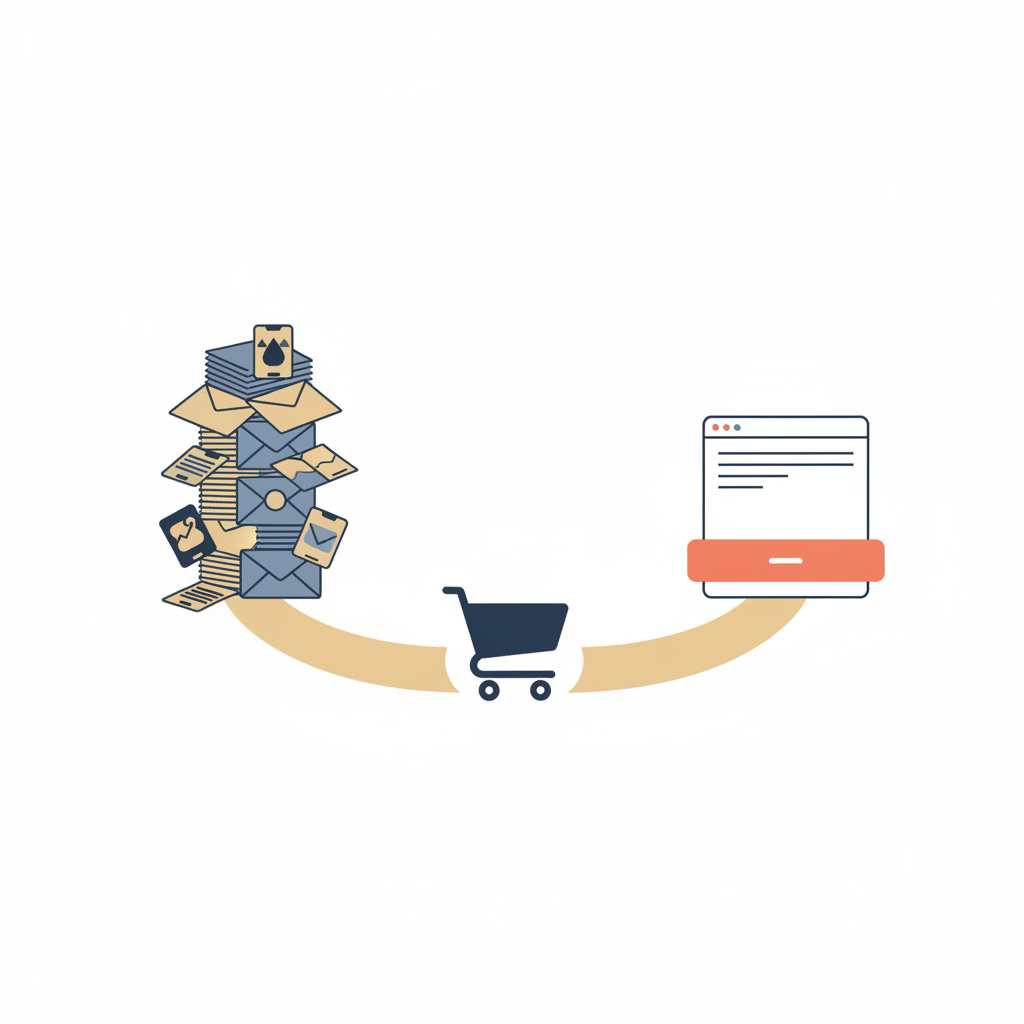
Here's her daily workflow:
Orders come in through Stripe. She gets an email notification for each one - name, address, what they bought. She checks the Stripe dashboard on her phone once in the morning and once at night. She packs and ships with pre-printed USPS labels from PirateShip (free, no subscription). Tracking numbers get emailed to customers through a simple automation - a Zapier free-tier zap triggered by Stripe's webhook.
Her total monthly costs: domain name ($1.50/mo through Cloudflare), Stripe's per-transaction fee, and shipping. That's it. No $39 going out the door on the first of every month regardless of sales.
When she wants to add a new product, she sends me the details and a photo. I update the site and create the Stripe product - takes about 15 minutes. Or she could do it herself in the Stripe dashboard and drop a new HTML block into the page.
What You Give Up (Honest Cons)
This approach isn't right for everyone. Here's what you're trading away:
1. No built-in inventory tracking. Stripe doesn't count stock for you. If you sell 12 products and make them by hand, you know what's in stock. If you're managing 200 SKUs across sizes and colors, you need a real inventory system - and at that point, Shopify or WooCommerce starts earning its keep.
2. No drag-and-drop store builder. You're working with code or hiring someone to set up the site. The Stripe dashboard handles products and checkout, but the storefront itself needs to be built. That's a one-time cost - I typically charge $500 for a setup like this - but it's not a weekend DIY project for most people.
3. No abandoned cart recovery out of the box. Shopify sends automatic emails when someone starts checkout and bails. You can replicate this with Stripe + an email tool, but it's not built in. For low-volume sellers, this rarely matters - abandoned cart emails recover maybe 5-10% of carts, and if you get 20 orders a month, that's one extra sale.
The Pros That Make It Worth Considering
1. Zero fixed costs. You only pay when you make money. For seasonal businesses - holiday gift boxes, event catering, summer camp signups - this is the difference between bleeding cash in the off-season and not.
2. Faster pages. A static site on Cloudflare loads in under one second. Shopify stores average 3.4 seconds on mobile according to real-world data. Speed affects conversion rates directly - every extra second of load time drops conversions by roughly 7%.
3. You own everything. Your site files sit in a Git repo you control. Your customer data lives in Stripe, which you can export anytime. If Shopify raises prices tomorrow - and platform pricing shifts happen regularly in tech - you're not locked in. There's no migration nightmare because there's no proprietary system to migrate from.
How This Compares to Other Options
WooCommerce is the other big alternative for an online store with no subscription fees. It's free and runs on WordPress. The catch: you need hosting ($5-15/mo), you need to manage WordPress updates and security patches, and WooCommerce sites are notoriously slow without caching plugins and optimization work. It's a good middle ground if you need 50+ products and built-in inventory, but it's more maintenance than the Stripe stack.
Ecwid (now Lightspeed E-Commerce) offers a free tier for up to 5 products. Genuinely free, no payment processing markup beyond standard rates. The limitation is obvious - five products - but for a micro-seller, it works. Beyond that, plans start at $25/mo, and you're back in subscription territory.
Square Online has a free plan with Square branding on your site. It's decent for food businesses already using Square for in-person payments. But the free tier is limited, the templates are rigid, and you're locked into Square's payment processing at 2.9% + $0.30 - same rate as Stripe, but without the flexibility.
The Stripe + static site approach sits in a different lane entirely. It's not a platform. It's plumbing - reliable, invisible plumbing that does exactly what you need and nothing you don't.
Who Should Actually Do This
An online store no subscription model works best if you match this profile:
- You sell fewer than 25 products
- Your products don't require complex variant management (though Stripe does support variants)
- You don't need real-time inventory sync across a physical store and online
- You want the lowest possible fixed costs
- You're comfortable with someone else building the initial site, or you can handle basic HTML
If that sounds like your situation - and it describes the majority of solo service providers, artisans, bakers, tutors, fitness coaches, and makers I've talked to - you don't need a $39/mo platform. You need a one-time build and a Stripe account.
What to Do Today
If you're paying a monthly subscription for a store that sells under 20 products, do this:
Go to dashboard.stripe.com and create a free account. Add one of your products. Click "Create payment link." Stripe gives you a hosted checkout page - test it, send it to a friend, see what the buying experience looks like. That page alone, shared via Instagram or email, can take real payments right now with no store at all.
If you want the full setup - a fast, clean storefront with your branding, product pages, and Stripe checkout - that's what I build at autom84you.com. Flat rate, no monthly retainer, and you own the result. I'll also tell you honestly if Shopify is actually the right call for your situation, because sometimes it is. Shoot me a note at nerd@a84y.com with what you sell and how many products you've got, and I'll give you a straight answer.



Comments
No comments yet. Be the first to share your thoughts!
Leave a Comment