
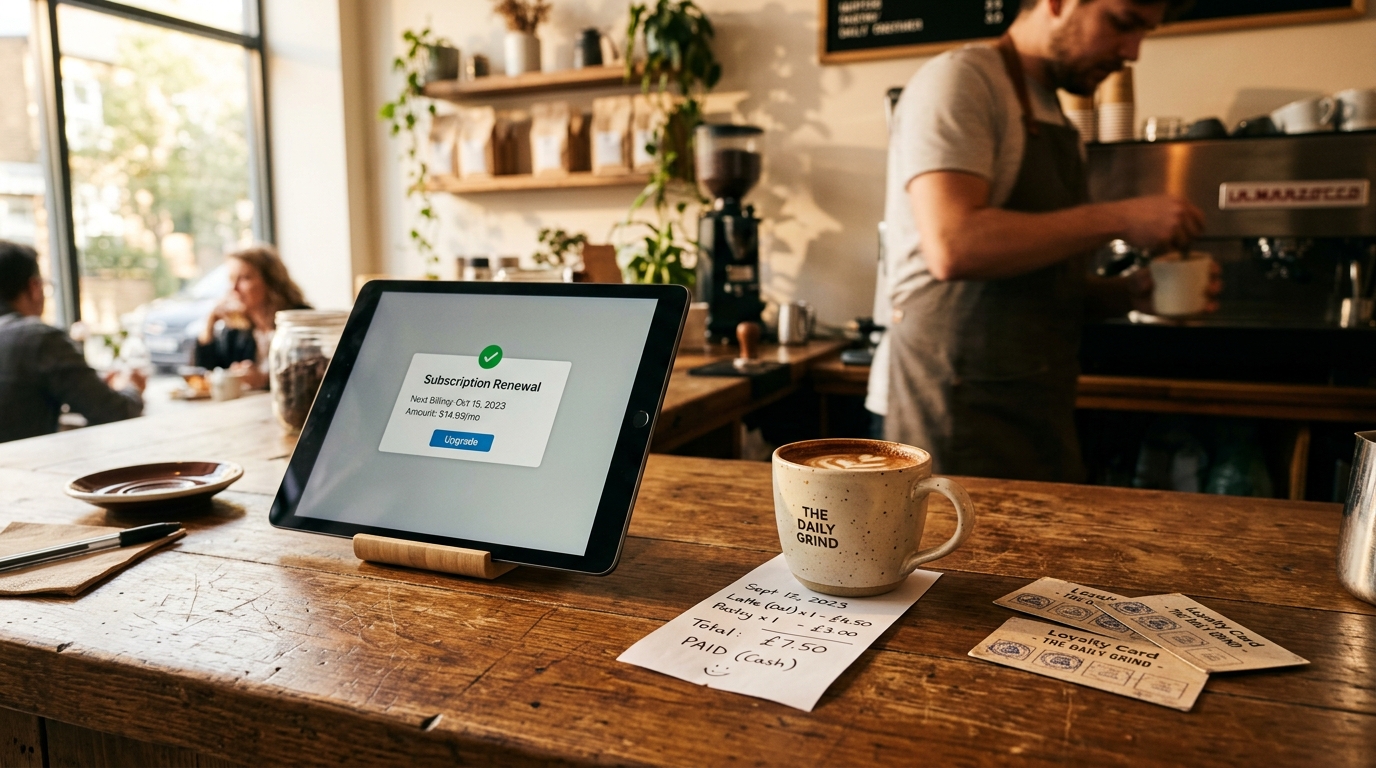
Last Tuesday at 2 AM, I was doing what every responsible adult does instead of sleeping: scrolling through my credit card statement like it was a true-crime documentary. Fourteen recurring charges. Fourteen. I recognized maybe five. The rest were SaaS tools I'd signed up for during what I can only describe as a 'productivity sprint' back in January - which is just a fancy way of saying I watched one YouTube video about automation and went feral on free trials.
This is the moment every small business owner eventually has. The SaaS Alternative Small Business Epiphany, if you will. Not the one where you find a better tool. The one where you realize the tool you're paying $29/month for does exactly what the free version of something else does, except worse, and with more emails about upgrading.
The SaaS Alternative Small Business Owners Actually Need
Here's the thing nobody tells you when you start a business: software subscriptions breed. You start with one project management tool. Perfectly reasonable. Then you need a CRM, so you grab HubSpot's free tier. Then someone says you need a dedicated email platform, so there's Mailchimp at $13/month. Then a scheduling tool. Then a form builder. Then a separate analytics dashboard because the one built into your website 'doesn't have enough granularity,' which is a word you definitely didn't use before 2024.
Six months later, you're a dog groomer paying $247/month in software subscriptions, which - and I cannot stress this enough - is more than some of your customers pay for the actual grooming.
The real saas alternative small business owners need isn't a different subscription. It's fewer subscriptions that do more. And sometimes it's not a subscription at all.
The Micro-SaaS Movement Is Quietly Solving This
There's a growing wave of what the industry calls micro-SaaS businesses - tiny, focused tools built by small teams (sometimes one person) that solve exactly one problem well. No feature bloat. No enterprise pricing tiers where 'contact sales' is code for 'you can't afford this.'
A wedding photographer doesn't need Salesforce. They need a way to track leads, send contracts, and get paid. A taco truck doesn't need a $200/month POS system with inventory management for 10,000 SKUs. They sell tacos. The SKU count is... tacos.
Micro-SaaS tools tend to cost $5-15/month instead of $30-80, because they're not trying to be everything. Some examples that actually exist in 2026:
- Tally - Free form builder. Does what Typeform does at $25/month, minus the animations nobody asked for.
- Plausible - Privacy-friendly analytics at $9/month. Replaces the Google Analytics dashboard you've never actually opened.
- Buttondown - Email newsletters starting free, $9/month for extras. No cartoon monkey mascot.
- Cal.com - Open-source scheduling. Free forever if you self-host, or $12/month if you don't want to think about hosting.
That last one touches on something important: a growing number of saas alternative small business tools are open-source, meaning you can run them yourself for free if you've got a server, or pay a modest fee for the hosted version. Website Planet's 2026 roundup covers several open-source website builders that follow this exact model - free to use, paid only if you want someone else to handle the infrastructure.
When the Alternative Is Just... Owning the Thing
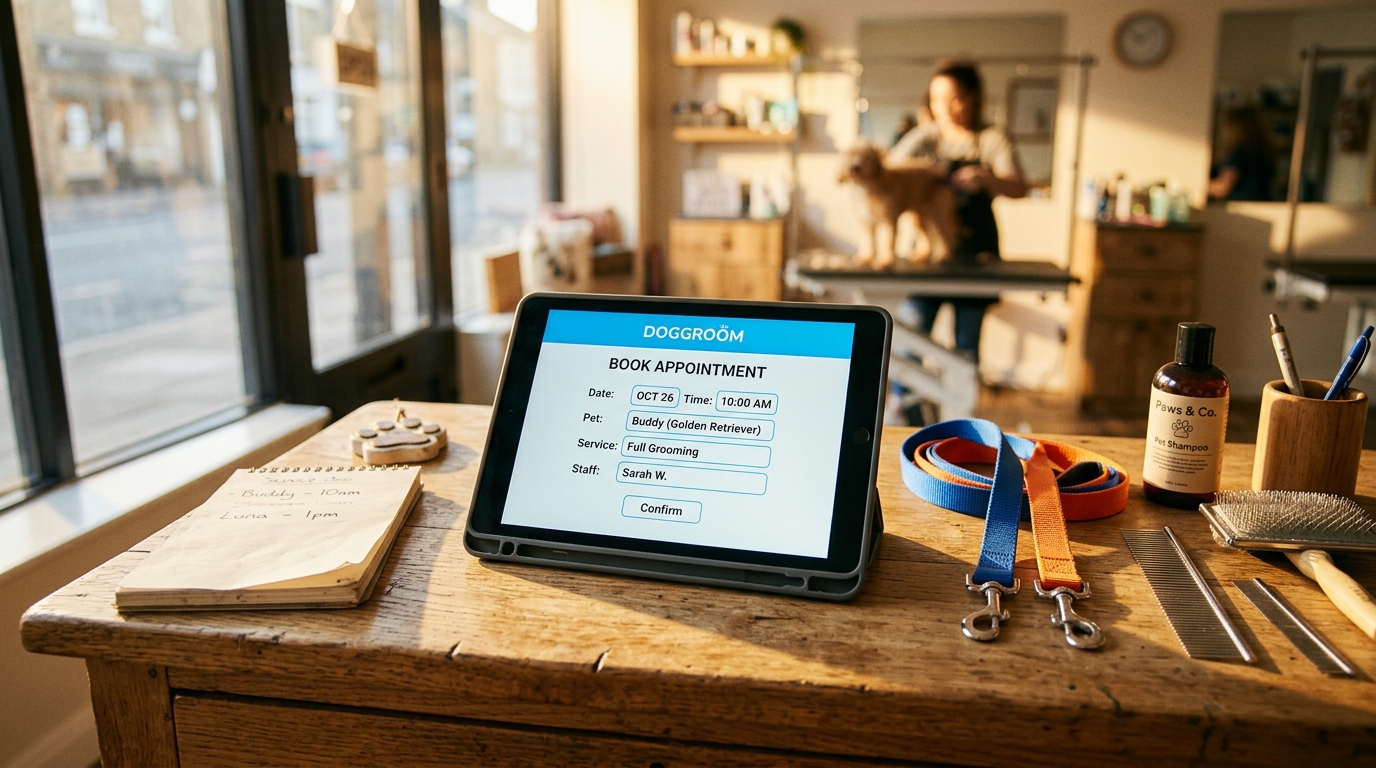
I'm biased here, obviously, because building custom tools for small businesses is literally what I do. But the math doesn't lie. If you're paying $50/month for a booking system, that's $600/year. A custom one costs around $500-750 to build and then it's yours. By month thirteen, you're in the black. By year three, you've saved $1,100. That's a lot of tacos.
The saas alternative small business owners keep overlooking is ownership. Not because they don't want it, but because somewhere around 2018, the entire software industry convinced everyone that renting is the only option. It's not. It's just the most profitable option - for them.
The Audit That Takes Twenty Minutes
If you've never done a SaaS audit, here's the version that doesn't require a spreadsheet certification:
- Pull up your bank statement. Search for recurring charges under $100. Write them all down.
- For each one, ask: Did I use this in the last 30 days? If no, cancel it. Right now. Before you talk yourself out of it.
- For the ones you keep, ask: Does a free or cheaper version exist? Often, yes.
- For the survivors, ask: Could two of these be replaced by one tool that does both? This is where the real savings hide.
I did this exercise last year for an HVAC company in San Jose. They were paying for seven different tools - scheduling, invoicing, email marketing, a CRM, a review management platform, a website builder, and a QR code generator. We consolidated down to three: a custom website with built-in scheduling and invoicing, a marketing suite with QR tracking, and their email platform. Monthly software cost went from $340 to $62.
That's the saas alternative small business owners don't think about - not switching from Tool A to Tool B, but realizing that Tool A, Tool C, and Tool E are all doing fragments of what one properly built system handles.
The Part Where AI Makes This Weirder
AI is reshaping how SaaS works, and honestly, it's making the subscription question even more confusing. Every tool now has an 'AI-powered' tier that costs 2-3x more. Your $13/month email tool? Now $39/month with AI subject line suggestions. Your CRM? Add $20/month for AI lead scoring. It's like every app collectively decided to charge extra for a feature that runs on the same technology as the autocomplete on your phone.
The saas alternative small business owners should consider here is building AI into tools you already own. A custom AI chatbot trained on your actual business data - your menu, your services, your FAQs - costs about $1,000 as a one-time build and doesn't have a monthly 'AI surcharge.' It just... works. On your site. Answering questions at 3 AM while you're doing credit card archaeology like a normal person.
The SaaS industry isn't going anywhere. There will always be tools worth subscribing to. But the saas alternative small business thinking should start with is simple: do I need to rent this, or can I own it?
Most of the time, the answer is quieter and cheaper than you'd expect.
If you want someone to do the credit card archaeology with you - or build the thing that replaces three of those line items - I'm at nerd@a84y.com. I work late. Obviously.

Comments
No comments yet. Be the first to share your thoughts!
Leave a Comment