
You have never changed the default ringtone on your phone. Don't lie to me. It's the same one that came out of the box, and every time it goes off in a quiet room, three other people reach for their pockets too. You just accepted it. You accepted the default wallpaper for six months. You accepted the default browser until someone physically showed you another one existed.
And this - this exact energy - is how most of us pick our business tools.
There's an overlooked alternative small business owners walk past every single day, and it's not hiding. It's sitting right there on the shelf, one row below the thing everyone grabs first. You didn't skip it because it was bad. You skipped it because nobody told you to look down.
The Default Settings Problem (And the Overlooked Alternative Small Business Owners Miss)
Here's how it works. You open your business. You need to take payments. Someone - a friend, a Reddit thread, a guy at a networking event who wouldn't stop talking - says "just use Square." So you use Square. You need a website. "Just use Wix." You need email marketing. "Just use Mailchimp." You need a CRM. "Just use HubSpot."
And look, none of these are bad. Square is fine. Wix is fine. Mailchimp is fine. They're the Honda Civic of business tools - reliable, everywhere, and exactly what the dealership pushes when you walk in without a strong opinion.
But "fine" has a cost. And the cost is usually your margin.
Take payment processing. Square charges 2.6% + 10 cents per tap or swipe. For a coffee shop doing $15,000 a month in card transactions, that's roughly $400 leaving your register every month. About $4,800 a year. That's not a rounding error - that's a used car. That's a new espresso machine. That's three months of a part-timer's wages.
Meanwhile, processors like BAMS - and a handful of others built specifically for small merchants - offer interchange-plus pricing that can land closer to 1.8-2.1% for the same transaction volume. The difference? Somewhere between $700 and $1,400 a year, back in your pocket. Not theoretical savings. Actual dollars that show up in your actual bank account.
But nobody at the networking event mentioned BAMS. Because nobody at the networking event had heard of it. Because it's not the default.
Why Defaults Win (Even When They Shouldn't)
There's a term in behavioral economics called the "default effect." People disproportionately stick with whatever option is pre-selected, even when switching would benefit them. It's why organ donation rates are wildly different between countries that require you to opt in versus opt out. Same humans, same organs, completely different outcomes - all because of which box was pre-checked.
Your business tools work the same way. The overlooked alternative small business owners could be using doesn't lose on features. It loses on visibility. On who has the biggest Google Ads budget. On who sponsors the podcast you listen to while doing inventory at 6 AM.
And I get it. When you're running a dog grooming shop or a taco truck or a wedding photography business, you don't have time to audit fourteen payment processors. You need something that works now. So you grab the default. That's rational. That's fine.
But once you're past the survival phase - once the doors are open and the lights stay on - it's worth spending one afternoon asking: "Am I still using this because it's the best option, or because it was the first option?"
Three Spots Where the Non-Default Pays Off
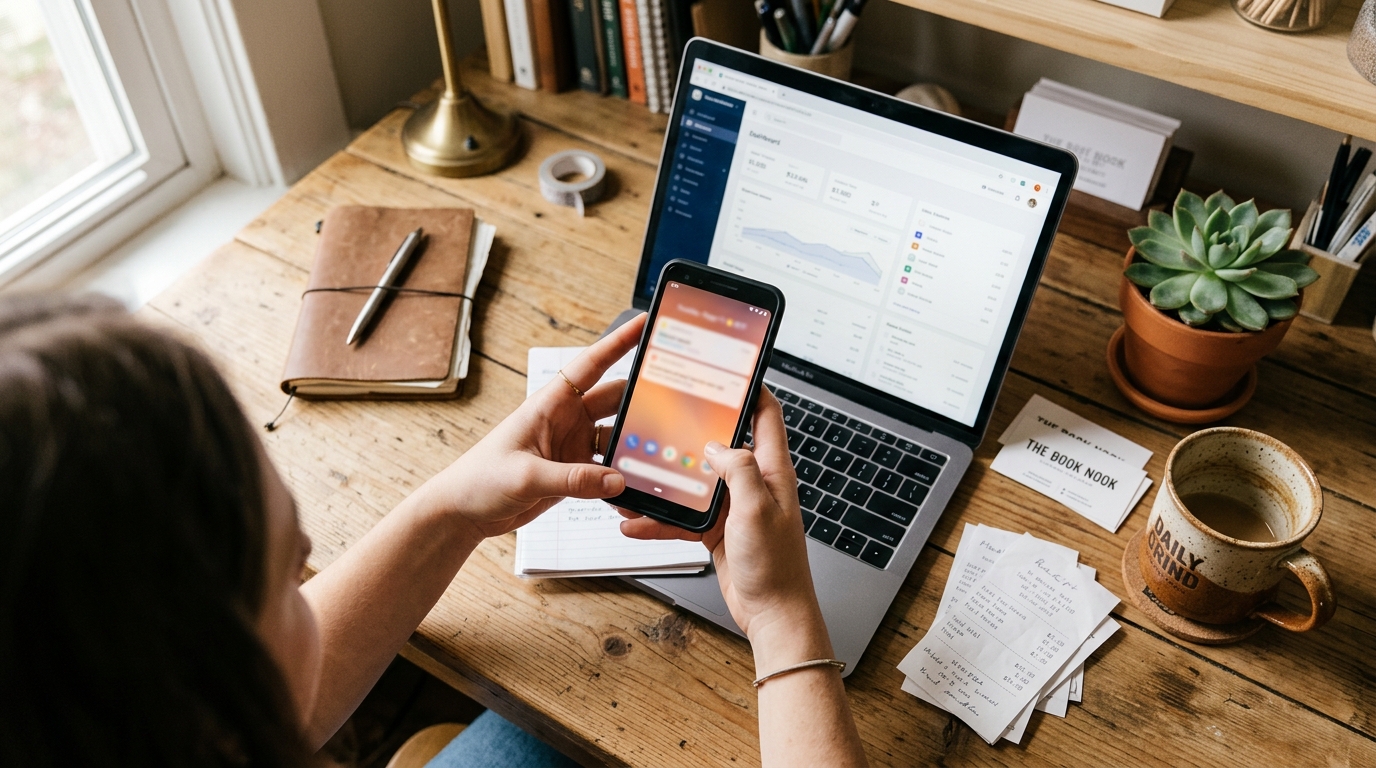
2. Website builders vs. actual websites. Here's a spicy one. Wix and Squarespace charge $17-49/month for a site you don't own, can't fully customize, and that loads like it's carrying a backpack full of rocks. A custom-built site on straightforward hosting can cost less per year than Squarespace's annual plan - and you own every pixel of it.
I build these at Autom84You starting at $500. That's not a monthly subscription. That's a one-time "here's your website, you own it, it loads in under two seconds, goodbye" situation. For a small business, the overlooked alternative small business websites represent - an actual custom site instead of a template - often pays for itself within the first year just on saved subscription fees. Plus it doesn't look like every other site built on the same template, which is nice if you'd rather not have your bakery's website look identical to a dentist's office in Tucson.
3. Email marketing. Mailchimp's free tier now caps at 500 contacts and 1,000 sends per month. For a small business growing its list, you hit that wall fast. Meanwhile, Brevo (formerly Sendinblue) gives you unlimited contacts and 300 emails per day on their free plan. MailerLite's free tier covers 1,000 subscribers with 12,000 monthly emails. These aren't sketchy startups - they're established platforms that just didn't win the brand-name lottery.
The difference in annual cost once you outgrow free tiers? Mailchimp's Standard plan for 2,500 contacts runs about $60/month. MailerLite's equivalent is $25. That's $420 a year in savings for - and I cannot stress this enough - sending the same emails to the same people.
The Real Cost of "Everyone Uses It"
Here's what bugs me. When someone says "everyone uses X," they're not making a quality argument. They're making a popularity argument. And those are very different things. Everyone used Internet Explorer in 2004. Everyone used Blackberry in 2008. Everyone used Vine in 2015. Popularity is a snapshot, not a verdict.
The overlooked alternative small business owners keep ignoring isn't worse. It's just quieter. It doesn't have a Super Bowl commercial. It doesn't have an affiliate program that turns every business blogger into a walking billboard. It just... works, and costs less, and hopes you'll notice eventually.
And the margin difference matters more than people admit. A business saving $200/month across three or four smarter tool choices - payment processing, website hosting, email marketing, maybe a CRM swap - is saving $2,400 a year. Over five years, that's $12,000. That's not "nice to have" money. That's "hire someone part-time" money. That's "finally buy that equipment" money.
How to Actually Find the Better Option
I'm not going to tell you to spend a week researching every tool category. That's a fantasy. Here's what actually works:
Pick one tool per month. Just one. Whatever you're paying the most for or whatever annoys you the most. Spend thirty minutes looking at two alternatives. Check pricing, check if they can import your data, check reviews from businesses your size (not enterprise reviews - those are a different planet).
If the alternative is clearly better, switch. If it's a wash, keep what you have. Either way, you're done in under an hour and you've made an informed choice instead of an inherited one.
And if you're the type who'd rather have someone else do that audit - especially for your website and digital tools - that's literally what I do. You can see past projects at autom84you.com/pages/portfolio.php or just email me at nerd@a84y.com and say "I think I'm overpaying for things" and I'll tell you if you are. No pitch. Just math.
The Punchline
You know what finally made me change my phone's ringtone? It went off during a client call and two other people in the room checked their phones. That was the moment I realized the default wasn't serving me - it was just... there, because I'd never questioned it.
Every overlooked alternative small business owners find tends to start the same way. Not with a dramatic revelation. Just with a quiet "huh, I wonder if there's something better" followed by thirty minutes of Googling and a slightly annoyed "...why didn't I do this sooner?"
That's the whole thing. No grand strategy. No twelve-step framework. Just occasionally looking one shelf down.
Your ringtone is still the default, though. I know it is.
- Rishi @ autom84you.com | nerd@a84y.com



Comments
No comments yet. Be the first to share your thoughts!
Leave a Comment