
There's a moment - and I say this with love - where every small business owner Googles "best tech stack for my business" and falls down a hole that ends with them pricing out a $400/month cloud architecture for a website that gets 200 visitors a day.
I've seen it happen in real time. A dog groomer in San Jose asked me to help fix her booking page. When I opened the project, she had a React frontend, a Node backend, a separate API gateway, and a PostgreSQL database running on three different cloud services. For a booking page. With four time slots.
That, friends, is an over-engineered small business app. And it's more common than you'd think.
The Myth: You Need a Modern Stack or You're Not Serious
Here's what the myth sounds like: "If you want your business to scale, you need to build it right from the start. Use the latest frameworks. Separate your concerns. Plan for a million users."
It sounds responsible. It sounds like something a smart person would say. And honestly? If you're building the next Uber, sure. But if you're running a landscaping company in Fremont, you do not need container orchestration. You need a contact form that works and a page that loads fast on someone's phone while they're standing in their yard looking at a dead lawn.
People believe this myth because the internet is full of tutorials written by engineers at companies with 500 developers. Those engineers aren't wrong - they're just solving a completely different problem. When Netflix talks about microservices, they're managing traffic that would melt your laptop. When a wedding photographer in Cupertino reads that same article and thinks "I should do that too," we've entered the danger zone.
Why the Over-Engineered Small Business App Keeps Happening
Three reasons, all understandable:
1. Developers build what they know. If a freelancer just came from a job at a big tech company, they're going to suggest the tools they used there. It's not malicious - it's muscle memory. But muscle memory from a 200-person engineering team doesn't map to a taco truck's online ordering system.
A taco truck needs: a menu page, an order form, maybe a Square integration. Total moving parts: about four. You can run that on a single $5/month VPS with a basic PHP or Python backend and sleep like a baby.
2. Hosting companies upsell like mattress stores. You walk in wanting the basic model and walk out with a $2,000 pillow-top that adjusts to your REM cycle. Cloud platforms do the same thing. "You could use a simple server... but what about auto-scaling? Load balancing? Multi-region failover?" For 200 visitors a day. You don't need failover. You need a functioning website.
3. Fear of looking amateur. Nobody wants to admit their business runs on a shared hosting plan and a WordPress theme from 2019. But here's the thing - your customers literally do not care. They care if the page loads. They care if they can find your phone number. They care if the "Book Now" button works. They have never once inspected your HTTP headers and judged you.
The Reality: Boring Tech Runs Real Businesses
A basic Linux VPS - we're talking DigitalOcean, Hetzner, or Vultr - costs $4 to $6 per month. On that single server, you can run a website that handles thousands of visitors per day, a contact form, a blog, email routing, and basic analytics. The tech? Apache or Nginx, PHP or Python, SQLite or MySQL. Stuff that's been around since before your business existed.
That's not a limitation. That's a feature. Boring tech has been debugged by millions of developers over decades. It doesn't break in exciting new ways at 2 AM. It just... works. Quietly. Like a Toyota Camry. Nobody brags about their Camry, but it starts every morning and that's the whole point.
Meanwhile, the over-engineered small business app - the one with the React frontend and the serverless functions and the GraphQL API - costs more to host, takes longer to update, requires a developer every time you want to change your hours, and breaks in ways that require a computer science degree to diagnose.
Real Businesses That Prove the Myth Wrong
Example 1: The HVAC company on a $6/month server. I built a site for an HVAC company in the South Bay last year. Static HTML for the main pages, a simple PHP form for quote requests, hosted on a single VPS. Total monthly cost: $6. It loads in under two seconds on mobile, ranks on page one for their target neighborhoods, and has generated consistent leads for over a year. No framework. No build step. No drama.
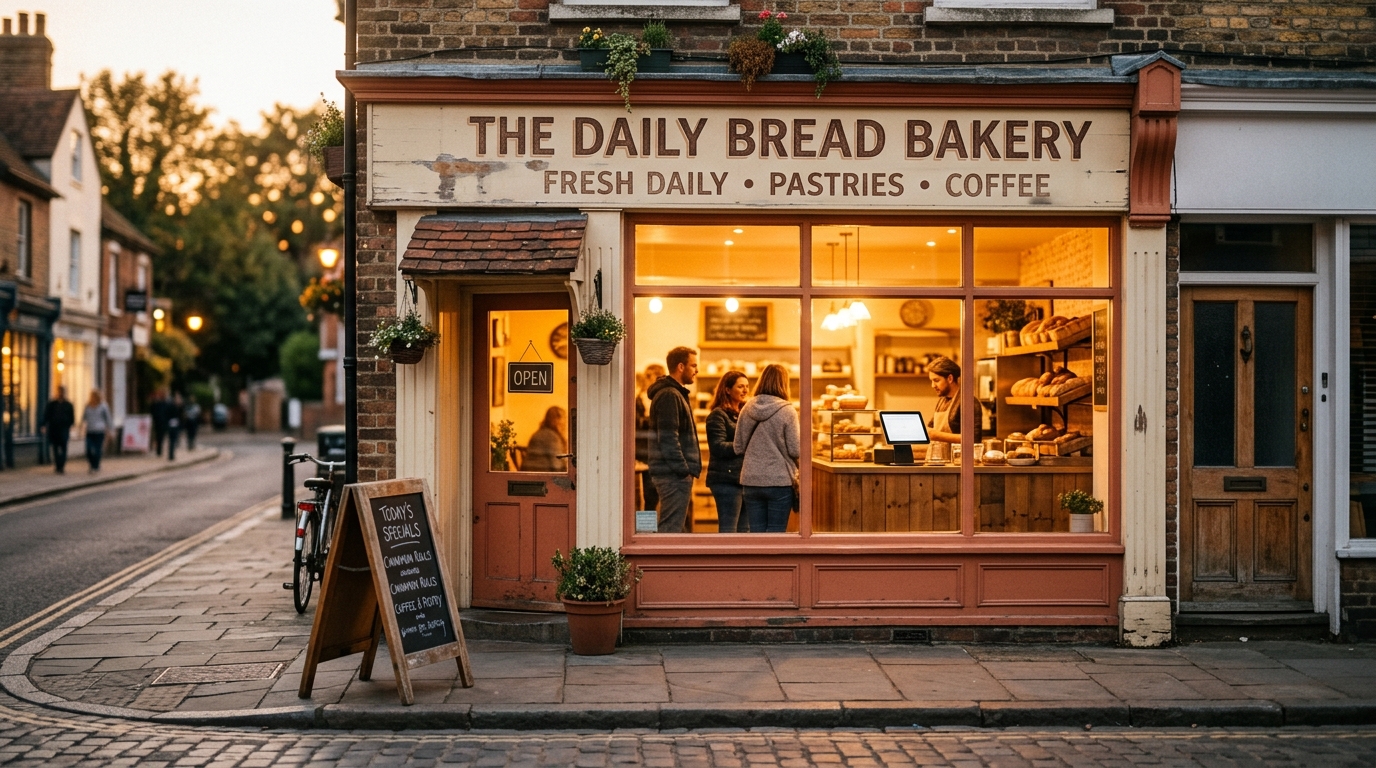
Example 2: The bakery that ditched its custom app. A bakery owner in Mountain View had paid a development shop $8,000 for a custom ordering app built on a modern JavaScript framework. It worked great - until it didn't, and the shop wanted $150/hour to fix it. She switched to a clean WordPress site with WooCommerce. Setup cost: about $500. Monthly hosting: $12. Her orders went up because the new site actually loaded on her customers' phones without a five-second spinner.
Example 3: The photographer running on HTML and vibes. A wedding photographer I know runs her entire online presence on hand-coded HTML, a gallery plugin, and a contact form that emails her directly. Her site is gorgeous, loads instantly, and costs her $48 a year to host. She books $5,000+ weddings from it. That's a return on investment that would make a venture capitalist weep.
How to Know If Your App Is an Over-Engineered Small Business App
Quick diagnostic. Answer honestly:
Does your website need a "build step" before you can see changes? Do you pay for more than two cloud services to run a site with under 1,000 daily visitors? Has a developer ever said the words "we should probably set up a staging environment" for your five-page website? Can you change your own business hours on your site, or do you have to email someone?
If you answered yes to two or more of those, you might be over-engineered. And that's okay - it's fixable. The goal isn't to feel bad about past decisions. The goal is to stop paying for complexity you don't need.
What to Do Instead
Here's the boring, effective playbook:
Start with a simple server. One VPS. One domain. A clean site that loads fast and tells people what you do, where you are, and how to contact you. That covers 80% of what a small business website needs to accomplish.
Add complexity only when you hit a real wall. If you're getting 10,000 visitors a day and your server is struggling, then talk about scaling. If you need real-time inventory sync across three locations, then consider a database upgrade. But don't build for problems you don't have yet. That's like buying a fire truck because you own a toaster.
Use tools that you or a general developer can maintain. If your site requires a specialist to update a phone number, something has gone sideways. The best small business tech is the kind where you can log in, change the thing, and move on with your day. That's what I build at Autom84You - sites and tools that business owners can actually use without calling me every week. Though I don't mind the calls. I'm usually just sitting here arguing with a CSS file anyway.
Spend the savings on things that actually grow your business. The difference between a $6/month VPS and a $400/month cloud setup is almost $5,000 a year. That's real money. That's a solid marketing campaign. That's inventory. That's a part-time employee for a month. Don't let your tech budget eat your actual business budget.
The Bottom Line on the Over-Engineered Small Business App
The myth says you need complex, modern, expensive infrastructure to be taken seriously online. The reality says a well-built simple site on cheap hosting will outperform an over-engineered small business app almost every time - because it loads faster, costs less, breaks less, and lets you focus on actually running your business instead of managing your tech stack.
As someone who's built both kinds - yes, I've been the person who over-engineered a project, and yes, I've had to sheepishly undo it - I can tell you the boring version wins. Every time. It's not glamorous. It doesn't impress other developers at meetups. But it works, it's cheap, and it lets you go home at 5 PM instead of debugging a deployment pipeline.
And honestly? Going home at 5 PM is the most advanced technology there is.
If your current setup feels more complicated than it should be - or if you're about to build something new and want to skip the overbuilding phase entirely - drop me a line at nerd@a84y.com or check out autom84you.com. I'll tell you what you actually need. It's usually less than you think.



Comments
No comments yet. Be the first to share your thoughts!
Leave a Comment