
The $400/Month Question Nobody's Asking
A dentist in Fremont emailed me last month. She'd been paying $79/month for Intercom for almost two years. Total spend: around $1,900. The chatbot on her website could answer three questions - office hours, insurance accepted, and how to book an appointment. That's it. Three answers for two grand.
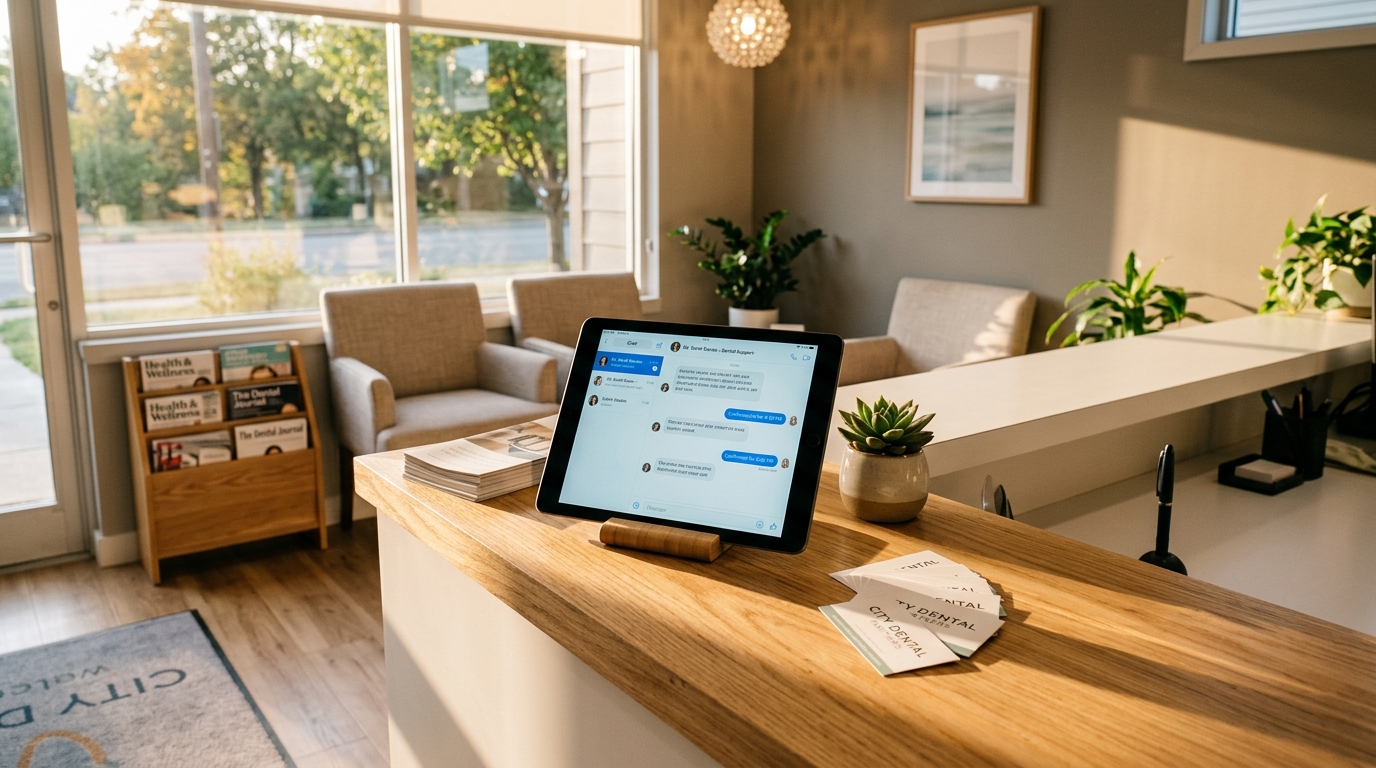
She wasn't even mad about the money. She was mad because patients kept asking questions the bot couldn't handle - things like 'do you do same-day crowns?' or 'my kid chipped a tooth, can I come in today?' - and the bot would just say 'Let me connect you with our team.' Her team was her and one receptionist. Nobody was there to connect to after 5 PM.
This is the real conversation around adding an ai chatbot for small business website setups: not whether you should, but whether what you're paying for actually does the job.
What an AI Chatbot for Small Business Website Actually Needs to Do
Forget the feature comparison charts for a second. Here's what a small business owner actually needs from a website chatbot:
- Answer the 10-15 questions that make up 90% of customer inquiries
- Be available when you're not (evenings, weekends, holidays)
- Sound like your business, not like a robot reading a script
- Capture leads - name, email, phone - when someone's interested
- Know when to shut up and hand off to a human
That's the bar. Not 'omnichannel engagement platforms' or 'conversational commerce solutions.' Just: answer the phone when I can't, and don't embarrass me.
Option 1: Tidio - The Budget Pick
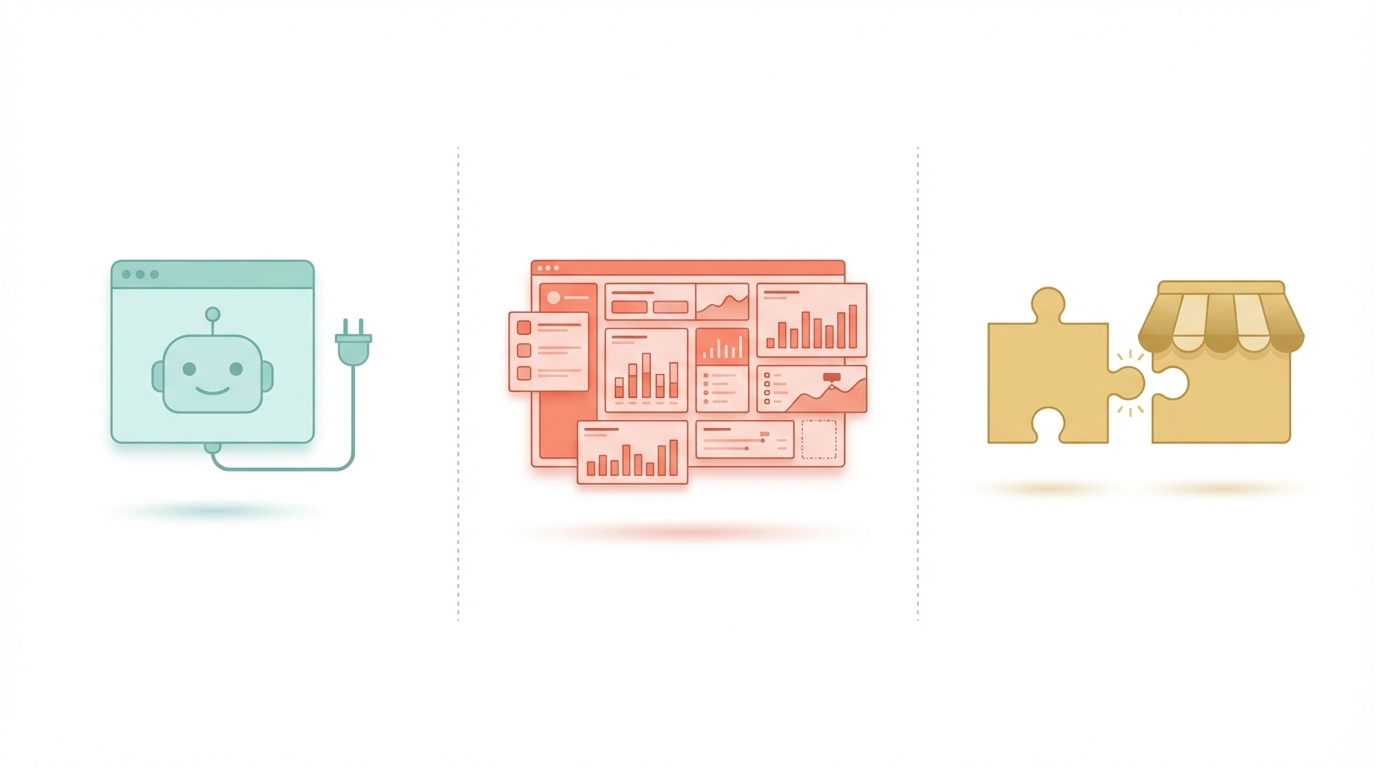
Tidio is the chatbot you'll find recommended on every 'best chatbots for small business' listicle, and for good reason. It's genuinely affordable and gets the basics right.
Pricing: Free tier handles up to 50 conversations/month with their AI. The Starter plan is $29/month for more volume. The Communicator plan at $25/month adds live chat. Most small businesses end up spending $29-$59/month depending on needs.
What it does well: You install a widget on your site, set up some pre-built conversation flows (they have templates for e-commerce, services, restaurants), and their Lyro AI can pull answers from your FAQ or knowledge base. Setup takes maybe an hour if you already have your FAQs written out.
Where it falls short: Lyro's AI is only as good as the content you feed it. If your FAQ page is thin - and let's be honest, most small business FAQ pages are three questions long - the bot won't know much. It also can't do anything dynamic. It can't check your actual appointment calendar, pull up order status, or look at your inventory. It's a smart FAQ reader, not an assistant.
Best for: E-commerce shops and service businesses that get repetitive questions and want something running by tomorrow.
Option 2: Intercom - The Enterprise Tool Wearing a Small Business Disguise
Intercom is powerful. It's also built for companies with 50+ employees and a dedicated support team. They offer a Starter plan, but calling it 'small business friendly' is a stretch.
Pricing: The Essential plan starts at $39/seat/month. Their AI add-on (Fin) costs $0.99 per resolution on top of that. If Fin handles 200 conversations a month, that's $198 just for AI - plus your seat fee. You're easily looking at $250-400/month for one person using it.
What it does well: Fin is genuinely impressive. It can ingest your entire help center, website content, and past conversation history. It handles nuanced questions better than most competitors. The analytics are also excellent - you can see exactly where customers drop off.
Where it falls short: The per-resolution pricing model is brutal for small businesses. Every time the AI answers a question, that's a dollar. And the setup complexity assumes you have someone technical on staff. I've seen business owners spend weeks configuring workflows that a developer could build in an afternoon.
Best for: Businesses doing $500K+ in revenue that already have a support person and need to scale. Not the right fit for a two-person operation.
Option 3: A Custom AI Chatbot - Built on Your Actual Business Data
Here's where it gets interesting. The same AI models powering Tidio and Intercom - large language models like Claude and GPT - are available to build with directly. A custom ai chatbot for small business website deployments can be trained on your specific business: your menu, your service list, your pricing, your policies, your personality.
I build these at Autom84You, so I'll be transparent about what's involved.
Pricing: A custom chatbot typically runs $1,000-$2,500 to build, depending on complexity. Ongoing AI costs (the API calls to actually run the thing) usually land between $5-$30/month for a typical small business volume. No per-seat fees. No per-resolution fees.
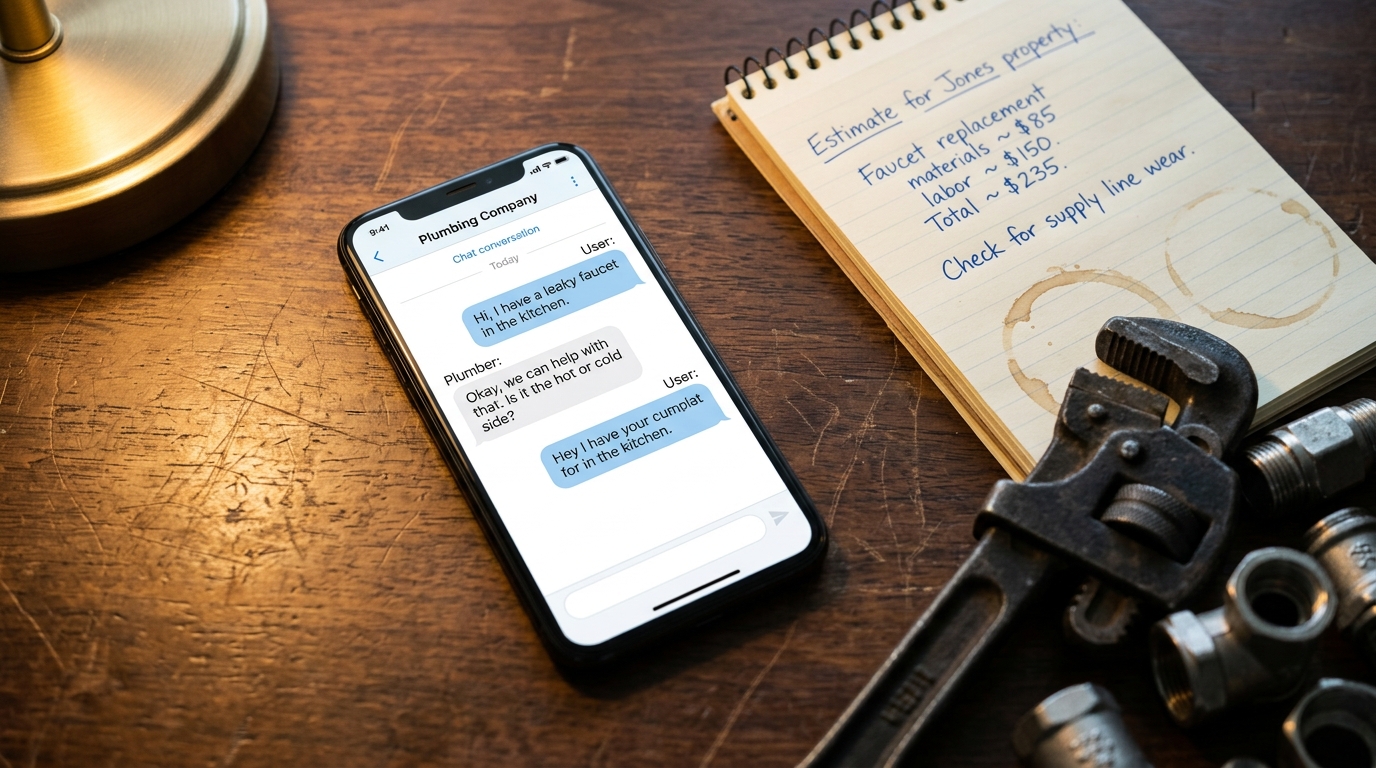
What it does well: Everything the others do, plus things they can't. A custom bot for a plumbing company doesn't just answer 'do you do water heater repair?' - it can ask what type of water heater, how old it is, describe the symptoms, and generate a pre-qualified lead with all the details the plumber needs before calling back. A custom bot for a restaurant can know the full menu, handle dietary restriction questions, and even integrate with the reservation system.
Where it falls short: There's no drag-and-drop setup. Someone has to build it. Updates to the knowledge base require either a developer or a simple admin panel (which adds to the build cost). And if your builder disappears, you need another developer to maintain it.
Best for: Businesses that have tried a template chatbot and hit its limits, or businesses with complex enough offerings that a generic bot can't represent them well.
Real Example: How a Salon in Sunnyvale Uses a Custom Bot
I set up an ai chatbot for small business website for a hair salon last year. Here's what their Tuesday looks like now:
A potential client visits the site at 9 PM. The bot greets them, asks what service they're looking for. Client says 'balayage.' The bot knows the salon's balayage pricing ($180-$250 depending on length), knows which stylists specialize in it, and asks if the client has a preferred day. The client says Saturday. The bot tells them Saturday availability is limited and suggests they leave their name and number for a callback - or offers a link to book online.
Before the chatbot, that person would have seen a contact form and maybe submitted it. Maybe. The salon owner told me her inquiry-to-booking rate went from around 15% to over 40% after the bot went live. That's real money - not a vague 'engagement metric.'
You can see this project and others on the Autom84You portfolio.
The Honest Comparison
| Tidio | Intercom | Custom Build | |
|---|---|---|---|
| Setup time | 1-2 hours | 1-2 weeks | 1-2 weeks |
| Monthly cost | $29-59 | $250-400+ | $5-30 (API only) |
| Upfront cost | $0 | $0 | $1,000-2,500 |
| 12-month total | $348-708 | $3,000-4,800 | $1,060-2,860 |
| Knows your business | Only your FAQ | Website + help docs | Everything you feed it |
| Custom integrations | Limited | Yes (complex) | Yes (built to spec) |
| You own the code | No | No | Yes |
Look at that 12-month total line. A custom build breaks even with Tidio around month 18-24. It's cheaper than Intercom by month 4. And you own it - no monthly fee increases, no feature downgrades when they change their pricing tier.
What About the New Players? Chativ and Others
There's a wave of newer tools specifically targeting small businesses with AI customer service. Microsoft is pushing hard into business AI with its Copilot strategy, and startups like Chativ are positioning themselves as affordable, instant-setup alternatives. Chativ specifically markets to small businesses with lower price points than Intercom.
The pattern with these newer tools is the same though: they're easier to start with but harder to customize deeply. If your needs are straightforward - answer common questions, capture leads, provide hours and location - a tool like Tidio or Chativ will serve you fine. If your business has any complexity to it - multiple service tiers, nuanced pricing, technical questions customers ask - you'll hit walls within a few months.
So What Should You Actually Do?
Here's my honest take on choosing an ai chatbot for small business website:
If you need something today and your budget is under $50/month: Start with Tidio. Write out your 15 most common customer questions with detailed answers, feed them to Lyro, and you'll have a decent bot running this afternoon.
If you're already paying for a tool that frustrates you: That frustration won't get better. Template tools have a ceiling, and you've hit it. A custom build will cost less over 18 months and do more from day one.
If you're not sure what you need: That's a fine place to be. Don't buy anything yet. Instead, spend one week writing down every question a customer asks you - on the phone, by email, in person, on social media. That list is your chatbot spec. Once you have it, the right solution becomes obvious.
The worst move is paying for a tool you don't configure properly. A $400/month Intercom plan with default settings is worse than a free Tidio bot with well-written FAQs. The tool matters less than the effort you put into making it actually know your business.
If you want to skip the DIY phase and just get a chatbot that knows your business inside out - or if you tried Tidio and want something with more depth - shoot me an email at nerd@a84y.com. I'll tell you straight whether a custom build makes sense for your situation or whether a $29/month tool is all you need. No pitch, just an honest answer. More about what I do at autom84you.com.


Comments
No comments yet. Be the first to share your thoughts!
Leave a Comment